
Kinda interesting I would say :)

Kinda interesting I would say :)
Source: VK Wotleaks community
One more picture of the untextured Chaffee – and armor. Only one thing left to leak – the T49. Unfortunately, it’s not being supertested yet. But as they say… “saved the best best for last”.
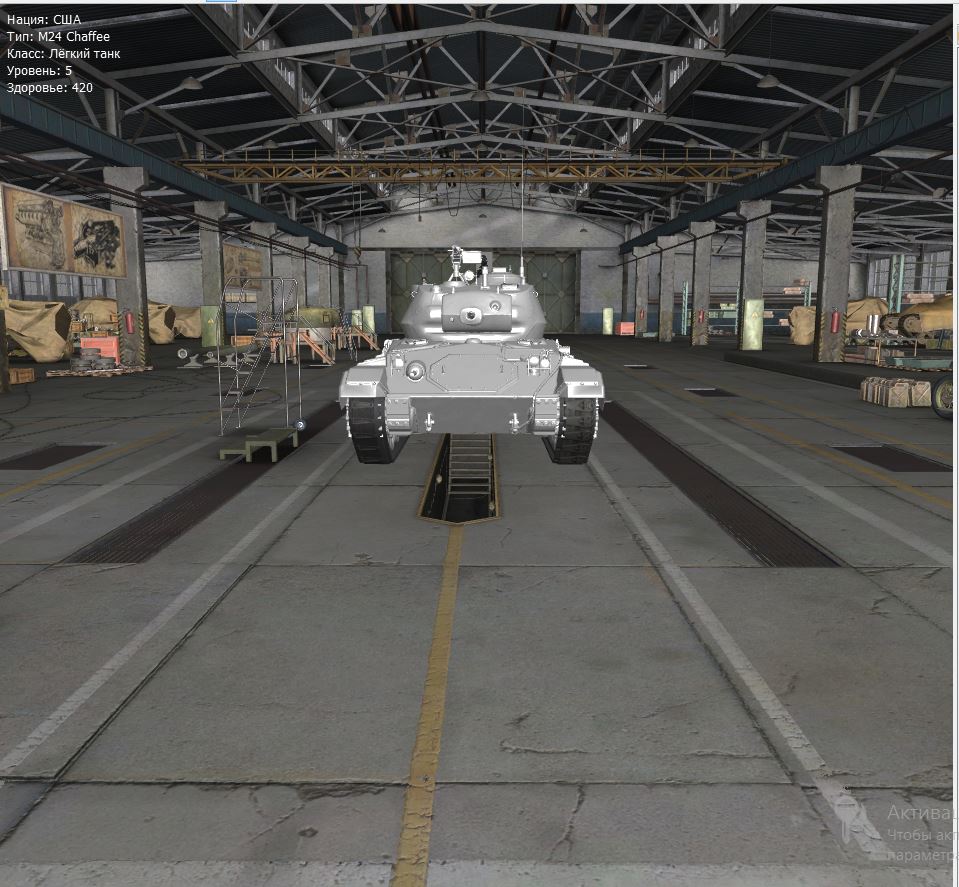
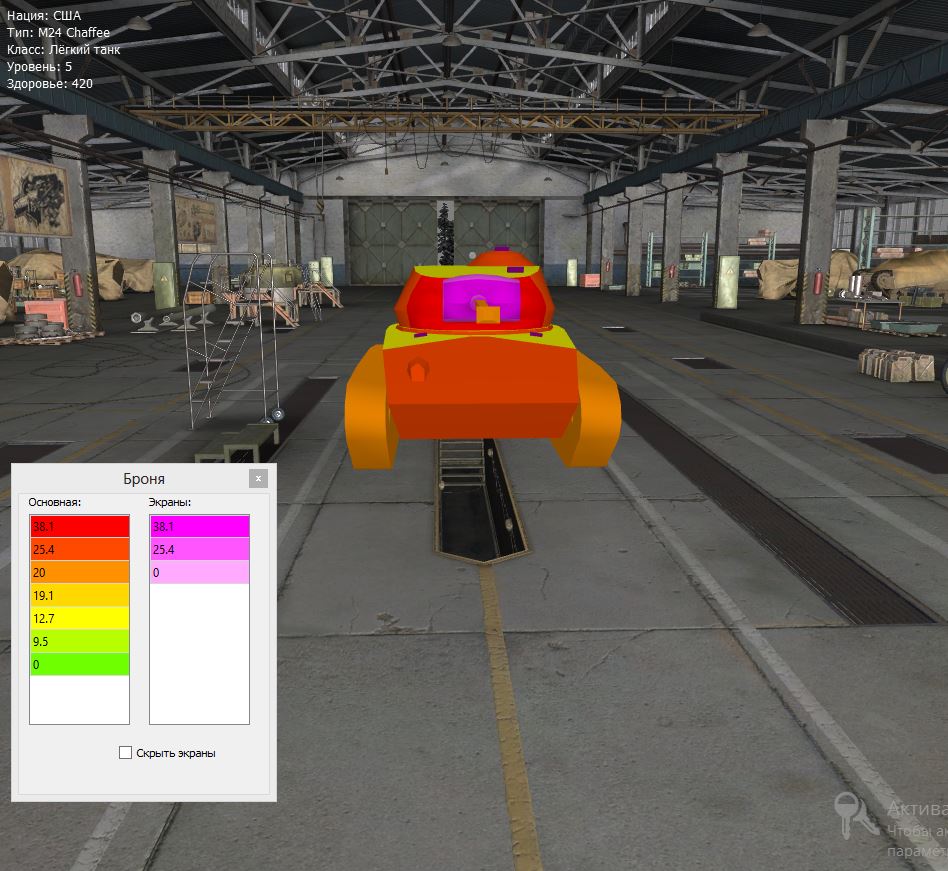
Source: Wotleaks VK community
Hello everyone,
currently, the supertesters got their hands on the new, reworked Chaffee (in HD, for now without texture), that’s going to appear in 9.3. One thing is clear: the Chaffee will recieve the same type of nerfs the VK2801 did for example, along with reduced MM spread. The only nerf currently known is that the elite Chaffee will have 420HP instead of current 580, but this is of course only the supertest version and likely will change.
Honestly, it always surprised me how people expected the vehicle NOT to be nerfed when it gets reduced MM.
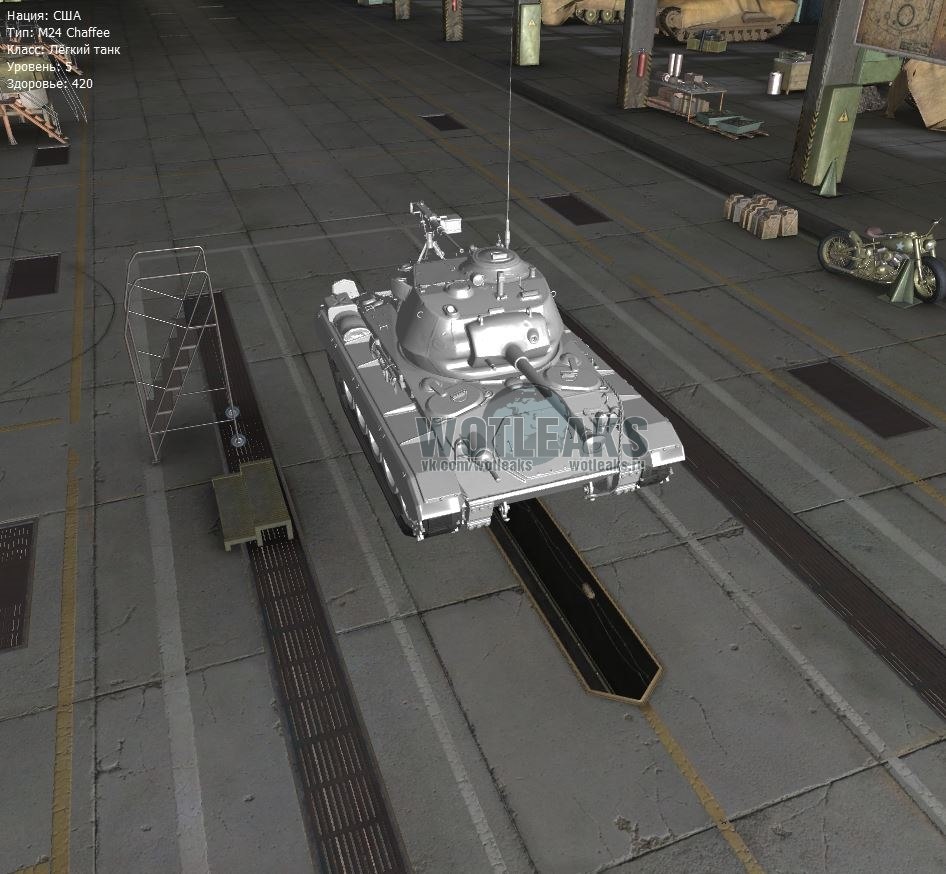
Oh yea, RU251 will appear in 9.3 – more on that in today’s QA.
Author: Buck_Rogers
Hello everyone,
today, we have another guest article, this time about a very interesting research the author conducted into the M29C Weasel armed with a 37mm gun. Enjoy!
- SS
The T32 Weasel
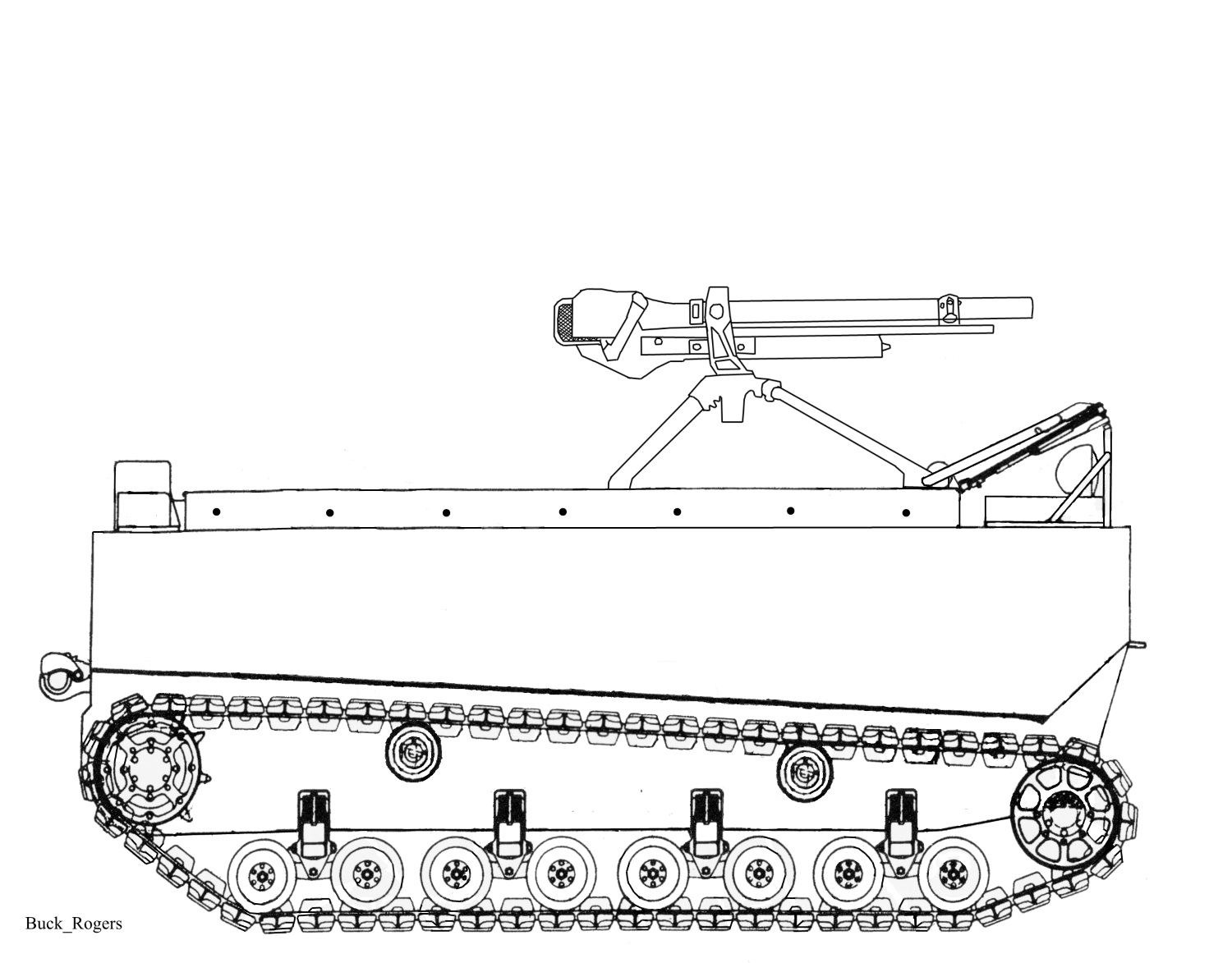
The T32 Weasel was a light self propelled gun tested at Aberdeen Proving Grounds in July 1945. It featured a 37-mm gun T32 on a quadrupod mounted over the engine bay of an M29C Weasel. The gun itself featured a new top carriage, and the Weasel incorporated various detail changes such as the addition of 37mm shell racks against the back center bulkhead. Only one vehicle is known to have been tested. This vehicle also tested the 75mm T21 and 57mm T15E9 (later M18) recoilless rifles. The quadrupod could also mount the M2 .50-cal.
You may come across references to Weasels mounting various 37mm guns. These are all erroneous and are in fact referencing this vehicle. This confusion arises from the near total obscurity of the 37mm T32.
by MrWanWan – enjoy :)
Hello everyone,
a couple of people sent me the links to this article yesterday, thank you for that – one Mr.Tiemo Jung made an analysis of the World of Tanks client on his website and it’s quite interesting. I have contacted him on EU forums and he gave me a permission to repost his analysis here, so here goes. The text is his, it is written from his perspective, I did not edit it apart from formatting it a bit (I did cut down the intro description a bit though). Enjoy.
Introduction
Finally i’ve got some time to work on a Project that i’ve wanted to do for quite some time, analyze the World of Tanks client, to find out how it ticks.
System Configuration:
Intel core i5 2400 (4 cores 3.1GHz)
16 GB Ram
Nvidia GeForce 660 Ti w/ 3 GB Ram
Samsung SSD 840 Series (240 GB): OS and Temp
Western Digital WD20EARX (2 TB): Game
Windows 8.1 Pro
And please excuse my not so perfect english, its not my native language, thanks.
Part 1 – Processes
The log that is used as base of this analysis can be downloaded here. If you want to see the log for your self, just get Process Explorer and open the WotLog.PML contained in the wotlog.7z with it.
This analysis is structured in multiple section, for each game state. First initialisation, this is from starting wot.exe until the login screen is displayed. Next is the login, this is from the display of the login screen until the the engine loads the hangar. Next parts are the hangar, match loading, the match it self and the hangar afterwards and the shutdown. There are also some sections covering some special behavior that are present during multiple phases, like shader loading, config storage and bugs.
Source: world-of-ru
Hello everyone,
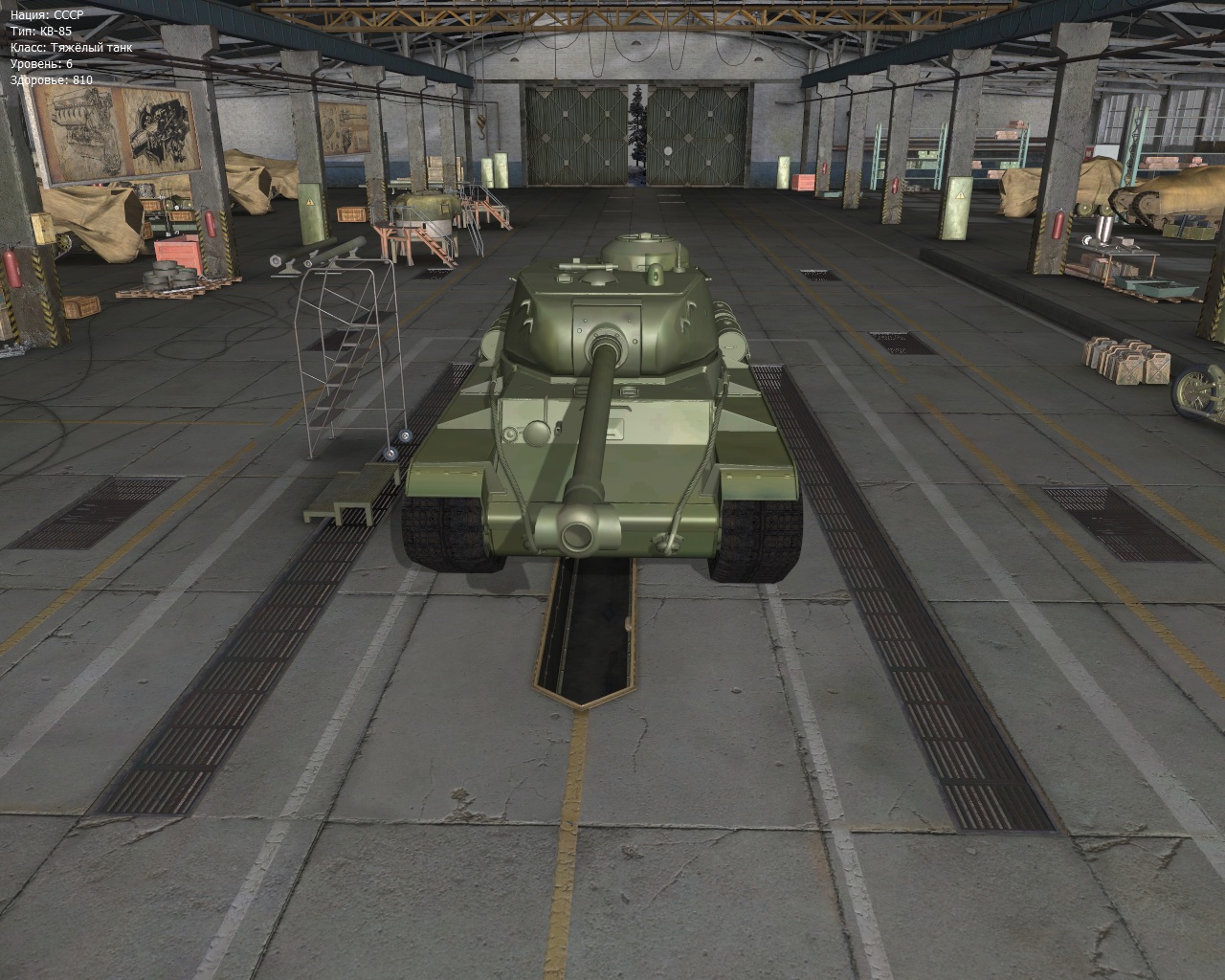
as you know already, in 9.3, KV-1S will be split into a tier 5 and tier 6 vehicle. The tier 6 will be called KV-85 and here it is, still untextured. The good (or bad) news is, it will keep its gun, the top gun is the 122mm D-25T.
Source: EU forums post
Changes in version 0.9.2 Common Test 2 vs. version 0.9.2 Common Test 1:
- Armor of the frontal section of the roof of the second turret for VK 45.02 (P) Ausf. B increased from 40 mm to 60 mm.
- Magazine reload time for the 12.8 cm gun for Waffenträger auf E 100 increased from 52 s to 58 s.
- Minor bugs in damage boxes for T32, IS, T54E1, M8A1 fixed.
- Minor bugs and defects in visual models fixed for the following vehicles: M18 Hellcat, T-34-85, Pz.Kpfw. III, Pz.Kpfw. IV Ausf. A, StuG III Ausf. G, SU-100, Churchill I.
- Models and textures of all vehicles in high-definition quality (HD vehicles) reworked for better display when graphics settings are set to medium or low.
- Some visual defects and errors fixed for the following maps: Fire Salient, Kharkov, Erlenberg, Sacred Valley, Sand River, Hidden Village, El Halluf, Cliff, Winter Himmelsdorf.
- Komarin map is unavailable for high-tier battles (available for Tiers I–VIII only). This change was not implemented during Common Test 1 by mistake.
- Ruinberg on Fire map is unavailable for Team Battles.
- Some bugs and defects in the Strongholds: Battles user interface fixed.
- Display of players’ nicknames whose vehicles were destroyed in team lists at the sides of the screen fixed.
- Some bugs during battle playback fixed.
- Red lines at the junction points of landscape textures, that appeared when using the old renderer with antialiasing on, fixed.
- Client hanging-up when loading a battle in rare cases fixed.
- Sounds of vehicle explosions made less loud.
- Items of the context menu of the tank carousel in the Garage changed to be consistent.
- Some defects in auto-detecting graphics settings fixed.
- Changes to the effect of ammo explosion made.
- Some effects of shells hitting various surfaces reworked.
- Bugs in the order of switching between allies in the Postmortem mode fixed.
- Issue when some players could not log in to the Common Test servers fixed.
- Minor interface bugs fixed.
Source: http://habrahabr.ru/company/wargaming/blog/229475/
Part 1 – http://ftr.wot-news.com/2014/07/14/wargaming-public-api-part-1/
Internal interaction of the API components background
To understand the principle of how WG API works, it’s worth looking at how the internal information flows are made, how the distribution of data is secured, their relevance etc. – this part is shortly decribing the internal component interaction organization.
Our entire infrastructure for games is built around the service model, which means the components are relatively independent and interact with each other using the API sets. This is due to several factors:
- even if something crashes, everything else keeps on working
- there are many components (authentication service, OpenID provider, rating systems, clan services, Clanwars, Wargaming league, game portals, forums, wiki, support and so on, altogether around 40 components)
- components are developed by different teams
- components are not released all at once
- complete shutdown of the entire system during updates is unacceptable
It’s obvious that to release a new version of two-three components, which are developed separately is significantly easier than to release of an entire huge system. Apart from that, the development of separate components as smaller functional elements is simplier than the management of the entire system.
Principles of interaction
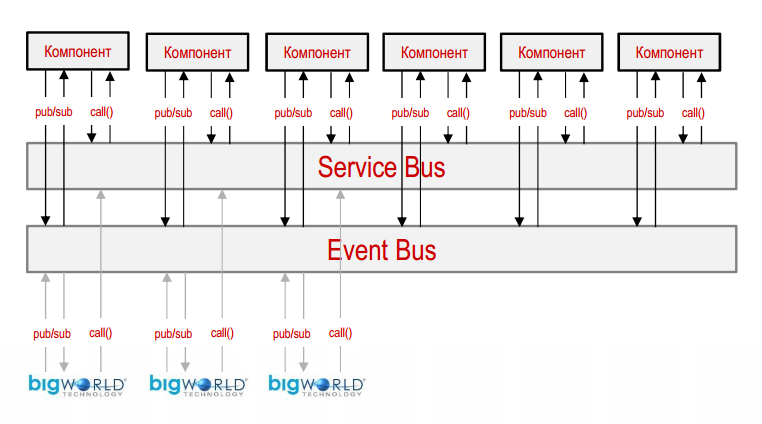
In our infractructure, there are two main flows of data: calls of remote API methods and another system (game server, other components) event subscription.The API component is most often represented by HTTP REST API. The API call can return the answer both synchronously and asynchronously. For asynchronous responses, we use Message Broker (RabbitMQ in our case) via AMQP protocol.
Subscriptions also happen via RabbitMQ. As an example of subscription, we can mention the export of game player account status after changes in it. Apart from that, for example, after every battle the dossier of the player tank which the battle was played with is exported into MQ. This allows the game portal to show the up-to-date player statistics (well, almost), all that while the game server recieves no additional load. In order to show the way our components interact, a picture (the upper part in cyrillic says “component”)
Hello everyone,
the war in Vietnam is not exactly known as a tank war, but that doesn’t mean tanks saw no action in this conflict. One of the best regarded vehicles in this matter were the Australian Centurion tanks and today, we’re going to talk about them a bit.
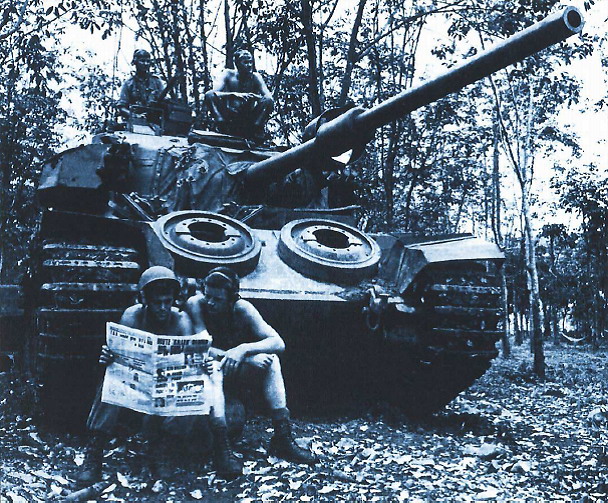
Australia, as a country not that distant from the (back then) turbulent south-east Asia, was very interested in the events happening in the region, especially during the Vietnam war and ever since the war started, it participated actively in it. From summer 1965, Australia sent an infantry batallion to Vietnam, increasing its size to a full brigade in 1966. Australian M113 APC’s also participated in the fighting, but their poor firepower and thin armor did not allow the Australians to use them in the thickest fighting. That’s why in September 1967, the Australian government decided they would reinforce the Australian forces in Vietnam with a Centurion tank unit. This caused a wave of criticism, as the military experts proclaimed that in the thick jungle terrain of Vietnam, the tanks would be all but useless and they would become mobile pillboxes at best. There was also this notion in Australia that the Centurions are “untouchable” – they were locally nicknamed “koala”, because this animal too was rare and not allowed to export.