Hello everyone,
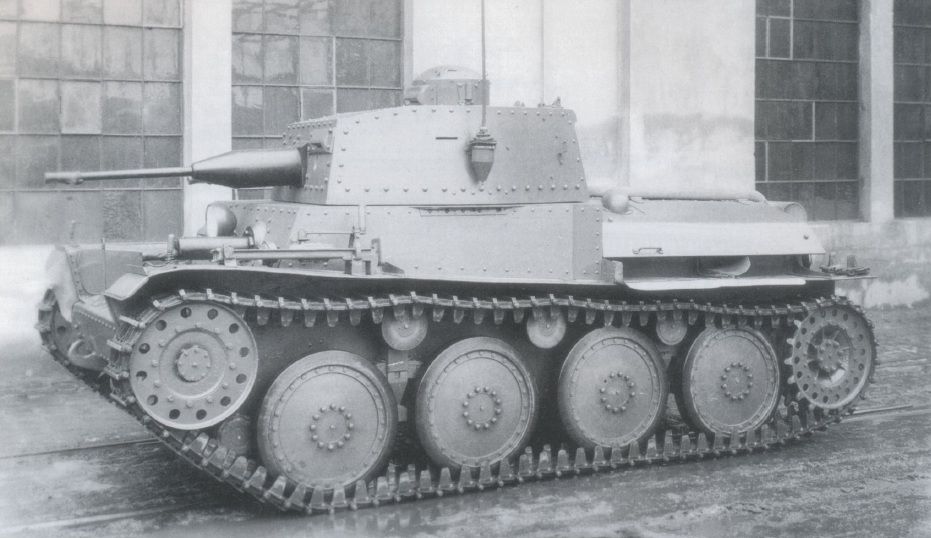
in part 1, we had a look at the birth of the LTL tank. Now, let’s continue on with the story. When we left off, the LTL prototype was actually built on 14.4.1938 and was ready to be presented to the Lithuanian forces.
But now, it’s April 1938 and dark clouds gather over Europe. Czechoslovakia too senses this – set upon by German terrorists backed by their nazi masters, a general consensus is reached to upgrade the Czechoslovak armored forces. A new program is created, a category designated IIa, that is to include the “light cavalry tanks” (fast, lightly armored vehicles, able to keep up with cavalry forces). Both Praga and Škoda are asked to present their suitable prototypes. Praga responds with three vehicles:
- an upgraded LT Vz.34, designated as P-IIR (R means “reconstructed”)
- TNH-S prototype for Swedish army (which would later become the famous LT Vz.38)
- the LTL
At that point however, the LTL prototype was not completely ready yet and while it was theoretically mentioned as a contestant, it did not actively participate in the tests – in the end, the committee declared the TNH-S to be the winner. In the meanwhile, an evaluation committee from Lithuania (Gen.Popeliučkis, Lt.Col.Masiulis and Lt.Tumosa) arrived in Prague to witness the LTL trials, which took place in mid May, 1938. The trial results went out on 28.5.1938. Possibly the most important element of these results was that the committee rejected the fact that the LTL was too heavy. The Lithuanians demanded strictly no more than 6 tons, while the vehicle was 7,2 tons heavy. The engine was also judged as underpowered, but apart from those things, the Lithuanians were relatively satisfied by the design. They even accepted the fact that the maximum speed was to be reduced from 54 to 45 km/h, but they demanded improvements to the powerplant and the drivetrain of the vehicle. Further trials were to continue when the prototype was upgraded according to Lithuanian demands.